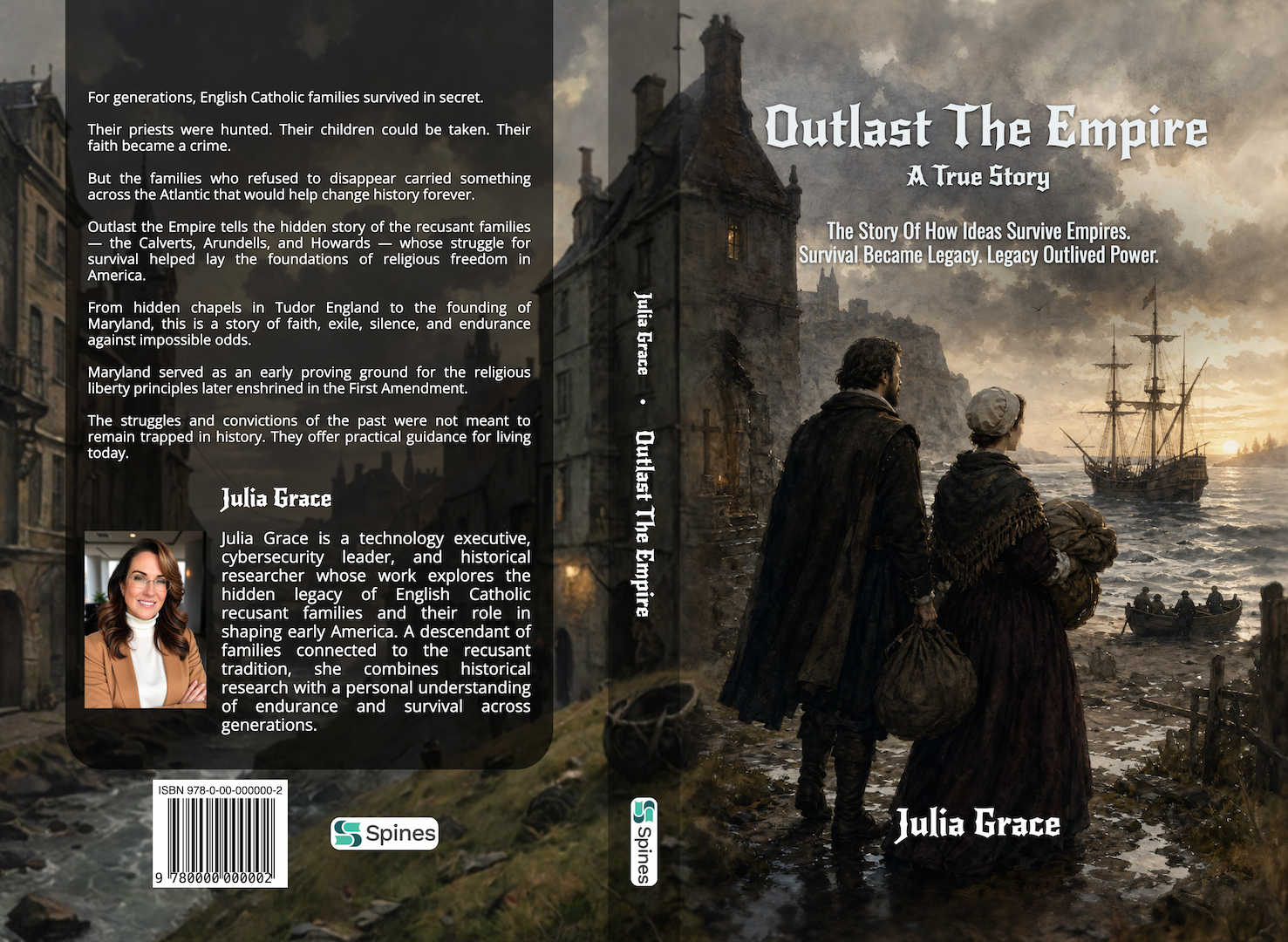
Before Plymouth Rock became a symbol, there were decades of persecution, exile, and survival. The story of America's founding begins far earlier than most history books acknowledge — and it begins with ordinary people who refused to submit.
The History That Was Left Out
Every nation tells a story about itself. America's founding narrative is one of the most powerful ever constructed — Pilgrims, freedom, a new world. But like all national stories, it is selective. The version taught in schools begins at Plymouth in 1620 and moves forward. What it rarely examines is the century of persecution, exile, and desperate survival that made that crossing necessary in the first place.
A Crime of Conscience
In Tudor and early Stuart England, practicing the Catholic faith was not merely unfashionable — it was a crime. Recusants, those who refused to attend Church of England services, faced ruinous fines, imprisonment, and the constant threat of having their children taken and raised in the state religion. Priests were hunted. Masses were held in secret rooms behind hidden doors. Families lived under a surveillance that would be recognizable to anyone who has studied authoritarian regimes.
The Families Who Refused to Disappear
Among these families were the Calverts, the Arundells, and the Howards — names that appear in the founding documents of Maryland and in the early architecture of American religious liberty. They were not rebels in the conventional sense. They did not take up arms. Instead, they endured. They preserved their faith across generations through silence, strategy, and an extraordinary willingness to sacrifice comfort, status, and safety for something they believed was worth more than any of it.
"They did not outlast the empire by fighting it. They outlasted it by surviving it — generation after generation, until the empire itself was the thing that disappeared."
The Crossing and What It Meant
When the Ark and the Dove set sail for Maryland in 1633, they carried something more than settlers. They carried a century of accumulated suffering and a deliberate vision for a society where no one would be persecuted for their conscience. The Maryland Toleration Act of 1649 — the first law in the English-speaking world to mandate religious tolerance — did not emerge from abstract principle. It emerged from lived experience. From families who knew exactly what it cost to be on the wrong side of a state religion.
Why This Chapter Matters Now
History is never just about the past. The recusant families whose story I have spent years researching were not exceptional people. They were ordinary men and women placed in extraordinary circumstances, who made choices about what they were willing to endure and what they were not. Their story is a reminder that the freedoms we take for granted were not given. They were built — slowly, painfully, across generations — by people whose names we rarely hear. This is the chapter America forgot. It is time to remember it.
A Note from the Author
This article draws on research from Outlast The Empire, available now. Julia Grace is a technology executive and historical researcher whose work explores the hidden legacy of English Catholic recusant families and their role in shaping early America.